Welcome to Year 1
Year 1 is a hugely important and exciting step in your child’s learning journey. It builds on the foundations established in Reception while helping children develop greater independence, confidence and resilience. Throughout the year, pupils strengthen their skills across all areas of the curriculum, learning how to work collaboratively, solve problems, ask questions and think creatively. As well as developing their academic knowledge, children continue to grow socially and emotionally, learning how to become confident, responsible and enthusiastic learners.
A key focus in Year 1 is developing strong literacy and numeracy skills. In English, children learn to read and write with increasing fluency, while in mathematics they build a secure understanding of number, calculation and problem-solving. Alongside this, pupils enjoy a broad and engaging curriculum including science, history, geography, art, DT, computing, music and PE. Learning is carefully planned to be practical, hands-on and inspiring, helping children make meaningful connections and develop a love of learning.
The Importance of Phonics
Phonics is at the heart of learning in Year 1 and is one of the most important skills children develop during this year. Through daily phonics lessons, children learn the relationship between letters and sounds, enabling them to read unfamiliar words and become confident, fluent readers. They practise blending sounds to read words and segmenting words to support their spelling and writing. As their phonics knowledge grows, children become more independent readers, opening the door to success across all areas of the curriculum. During the year, children also prepare for the Year 1 Phonics Screening Check, which helps ensure they are developing the essential reading skills needed for future learning.
How Parents Can Support at Home
Parents play a vital role in supporting their child’s success in Year 1. Reading regularly at home is one of the most valuable ways to help your child progress. Encouraging your child to practise their phonics, read their school reading book and share stories together every day will help develop confidence, fluency and a love of reading. Talking about books, asking questions and celebrating achievements can make reading both enjoyable and meaningful. Supporting children with counting, recognising numbers, practising number facts and discussing their learning experiences also helps reinforce skills taught in school. Most importantly, showing enthusiasm for learning and praising effort will help children develop confidence, perseverance and a positive attitude towards school.
Meet our Year 1 Team:
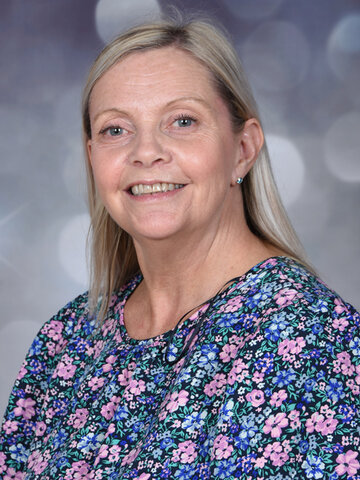
1L – Mr Lawrie’s class will be taught by Mr Lawrie but Mrs Proudlove will teach 1 day every other week..


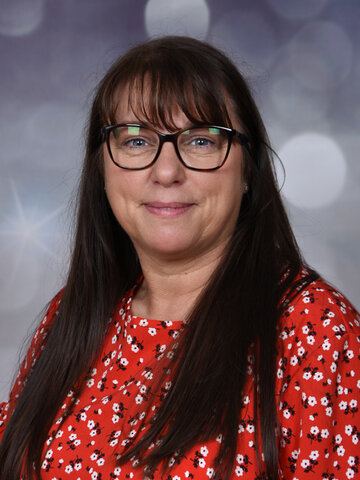
1C – Mrs Conroy's will be taught by Mrs Conroy apart from one day every other week when it will be taught by Mrs Proudlove


Showbie
We use Showbie as an aid to enhance learning and also to communicate. All children in year 1 should have a Showbie login. We have found it is better to log in as a child instead of a parent on your device at home as this will allow you to edit as well as see documents. Make sure you check your child account regularly for information.
Timetable of our week
This is a rough timetable of our week. This may change each week depending on the whole school calendar.
PE - Our PE days this half term are Monday and Thursday for Mr Lawrie's class and Monday and Tuesday for Mrs Conroy's class. Please send your child to school in their PE kit on these days, this starts from the second week back.
Coats - Please can you send your child in with a coat everyday as we will be doing learning in and out of the classroom in both rain and shine!!! It would be a real help if these were clearly named so they don't get lost.
Water bottles - Please ensure that your child's bottle is in school every day so that they can access a drink during the day. These aren't provided by school so please ensure you have one for the start of the year.
Below are some websites that will help support your child's learning at home:
Time
http://www.bbc.co.uk/bitesize/ks1/maths/telling_the_time/play/popup.shtml
http://resources.oswego.org/games/BangOnTime/clockwordres.html
http://resources.oswego.org/games/stoptheclock/sthec3.html
Place Value
http://www.topmarks.co.uk/ordering-and-sequencing/chinese-dragon-ordering
http://www.sheppardsoftware.com/mathgames/earlymath/BalloonCount20.htm
http://www.ictgames.com/placeValue.htm
https://nrich.maths.org/8940
Addition and subtraction
http://www.iboard.co.uk/iwb/Simple-Addition-Stories-721
http://v7.k12.com/sample_lessons/activities/images/swfs/building_expressions_final.swf
http://www.arcademics.com/games/alien/alien.html
Measuring height and length
http://www.eduplace.com/cgi-bin/schtemplate.cgi?template=/kids/mw/help/eh_popup_k.thtml&grade=K&title=Compare,+Order,+and+Measure+Length&tm=tmfa0113e
http://www.iboard.co.uk/activities/path/measuring_length/subject/maths
Multiplication and Division
http://www.topmarks.co.uk/Flash.aspx?f=grouping
http://www.topmarks.co.uk/Flash.aspx?f=sharingv2
English and Phonics
http://www.lancsngfl.ac.uk/curriculum/literacy/lit_site/html/fiction/fairytale2/fairytale.htm
http://www.bbc.co.uk/bitesize/ks1/literacy/using_punctuation/play/
http://www.bbc.co.uk/schools/starship/english/penguinsonice.shtml
http://www.bbc.co.uk/bitesize/ks1/literacy/phonics/play/
http://www.roythezebra.com/reading-games/high-frequency-words-numbers.html
http://www.phonicsplay.co.uk/SentSubPhase5a.html
http://www.phonicsplay.co.uk/PicnicOnPluto.html
http://www.phonicsplay.co.uk/BuriedTreasure2.html
http://www.phonicsplay.co.uk/aiAltSpellings.html
Reading
In Year 1 we focus on fluency (how quickly a child can read accurately) and comprehension (children understanding what they are reading). Please can you ensure that you’re reading regularly with your child as we can see the benefits not only in the children’s reading but their writing too.
We also have the phonics screener in June that we work towards in class. We would really appreciate support at home with this too as the more practice the children get, the better.
Your child will read with an adult three times a week in the phonics reading sessions. This book will then come home to be shared with you.
Reading at Home – Helpful Tips for Parents
Reading together every day, even for just 10 minutes, makes a huge difference to your child’s progress and confidence. Below are some easy ways to support your child when reading at home.
1. Create a Calm Reading Time
Find a quiet spot, turn off distractions, and make reading part of your daily routine. Keep it positive and relaxed — your encouragement matters most!
2. Before You Start
-
Look at the front cover and talk about the pictures.
-
Ask: “What do you think this story might be about?”
-
Spot any familiar words or sounds before reading.
3. During Reading
If your child gets stuck on a word:
-
Encourage them to segment (sound out) the word — e.g. /c/ /a/ /t/.
-
Then blend the sounds together — “cat”.
-
If they’re still unsure, tell them the word and move on — keep the reading flowing and positive.
-
Praise effort: “You worked hard to sound that out!”
Other helpful prompts:
-
“What sound does that letter make?”
-
“Can you spot a chunk or pattern you know?”
-
“Does that word make sense in the sentence?”
4. Tricky Words
Some words can’t be sounded out (like said, the, was). Practise recognising these on sight and point them out when they appear in the book.
5. Talk About the Story
After reading, ask simple questions to check understanding:
-
“What happened at the start?”
-
“Who was your favourite character?”
-
“Why did that happen?”
-
“What do you think will happen next?”
Encourage your child to talk about their favourite parts or something that made them laugh.
6. Keep It Fun and Encouraging
-
Take turns reading pages.
-
Use funny voices for characters.
-
Celebrate mistakes as learning opportunities — that’s how progress happens!
-
Finish with praise: “You’re becoming such a confident reader!”
7. If Your Child Is Struggling
-
Keep sessions short and positive.
-
Revisit familiar books to build confidence.
-
Focus on one small step at a time — like practising a few sounds or tricky words.
-
Let the teacher know if certain sounds or words keep causing difficulty so we can help in school too.
Remember
Reading should be enjoyable — a chance to share stories, laughter, and curiosity. Every page you read together helps your child grow as a reader.
Pathways to Write
Through a text-based approach, we teach writing skills and knowledge through the books below.
This half-term we will be using The Lion Inside as an aid for learning. Please don't read this with your child at home yet as we want to keep the story a surprise for the children!
Help at home
If you want to help out at home this half-term, you could:
- Write shopping lists with your child
- Practice writing sentences (full stops and capital letters)
- Write a diary with your child
- Write exciting stories
|
Books your child’s learning will be based around |
|||||
|
Autumn 1 |
Autumn 2 |
Spring 1 |
Spring 2 |
Summer 1 |
Summer 2 |
|
Lost and found by Oliver Jeffers
|
Nibbles by Emma Yarlett
|
The Lion Inside by Rachel bright
|
The curious case of the missing mammoth
|
Toys In Space by Mini Grey
|
Goldilocks and just the one bear by Leah Tomkinson
|


Mathematics in Year 1
Our Approach to Maths
At our school, we follow the Power Maths scheme, which is fully aligned with the National Curriculum and based on the Teaching for Mastery approach, developed through the NCETM. Power Maths helps every child to build a deep, secure and adaptable understanding of maths through small, carefully sequenced steps. It encourages children to think, explore and talk about maths — not just do it.

What is Maths Mastery?
The Mastery approach, promoted by the NCETM, is built on the belief that every child can succeed in maths. Instead of racing through content, we spend time developing a deep understanding of key concepts. This helps children make connections between ideas and apply their knowledge in different ways.
In a mastery classroom:
-
All children move through topics together at broadly the same pace.
-
Concrete (hands-on), pictorial (visual), and abstract (symbolic) representations are used to build secure understanding.
-
Problem-solving and reasoning are central — children learn to explain their thinking, not just give answers.
-
Quick graspers are challenged through deeper questioning rather than moving ahead to new content.
This approach ensures that learning is secure, inclusive, and long-lasting, setting firm foundations for future maths success.
What Happens in a Power Maths Lesson
Each Power Maths lesson follows a clear, consistent structure designed to develop confidence and curiosity:
-
Discover – A practical or story-based problem introduces the lesson in a real-life context. Children explore and discuss ideas together.
-
Share – The class shares different methods and strategies, guided by the teacher.
-
Think Together – Children work through carefully scaffolded examples, building their understanding step by step.
-
Practice – Independent and paired tasks help children apply what they’ve learned.
-
Reflect – The class comes together to discuss what they found out and what they can do next time.
This structure helps children reason, talk, and problem-solve — building mathematical fluency and confidence.
What We Cover in Year 1
Autumn Term:
-
Counting, reading, and writing numbers to 100
-
Place value (tens and ones)
-
Addition and subtraction within 20
-
Shape recognition and properties
-
Number bonds to 10 and 20
Spring Term:
-
Counting in 2s, 5s, and 10s
-
Comparing numbers and using symbols (<, >, =)
-
Measurement: length, height, weight, and capacity
-
Multiplication and division through grouping and sharing
-
Fractions: halves and quarters
Summer Term:
-
Position and direction (turns, left/right)
-
Time: o’clock and half past
-
Money: recognising coins and making totals
-
Consolidation and reasoning through problem-solving
Why We Use Power Maths
Power Maths is recommended by the Department for Education and developed alongside the NCETM. It supports a growth mindset by helping children see mistakes as part of learning and encourages deep mathematical thinking. Lessons are interactive, engaging, and designed to promote talk, collaboration, and independent reasoning.
By using Power Maths and the mastery approach, we aim to nurture confident mathematicians who are curious, resilient, and ready to tackle challenges with enthusiasm.
Our Year 1 Provision
In Year 1, we continue to use a provision-based approach to support the smooth transition from Reception. This helps children move from learning through play to more structured activities in a way that feels natural and engaging. Provision allows children to explore, investigate and apply their learning independently, while adults guide, question and extend their thinking. It helps build confidence, curiosity and problem-solving skills — all essential foundations for success throughout Key Stage 1.
Our classroom provision areas include a construction zone for building and design challenges, a role-play area that links to our class texts and topics, a creative area for art, collage and making, and a small-world area where children can retell stories and invent their own. We also have maths and phonics investigation areas that let children practise new skills through hands-on games and challenges. Outdoors, our provision encourages movement, teamwork and real-world exploration.
Through this blend of play and purpose, our Year 1 children remain active, motivated learners who see every challenge as an opportunity to discover something new.
Autumn 1 – Lost and Found by Oliver Jeffers
Our learning this half term will be inspired by Lost and Found, a heartwarming story about friendship, kindness and adventure. Children will explore themes of belonging, helping others and building positive relationships. Through English, they will develop their storytelling skills, write character descriptions and recount journeys. In Geography, we will learn about maps, continents and oceans, while Science will focus on seasonal changes as we move into autumn. Creative learning opportunities in Art and DT will allow children to design and create their own boats, whilst PSHE will support children in settling into Year 1 and becoming confident members of our classroom community.
Autumn 2 – Nibbles by Emma Yarlett
This half term, the mischievous character of Nibbles will take us on a journey through a variety of familiar tales. Children will explore different types of stories, develop their comprehension skills and begin creating their own imaginative narratives. The topic provides opportunities to compare traditional tales and discuss characters, settings and story structures. In Art and Design, children will create story-inspired artwork, while Computing and DT activities will encourage creativity and problem-solving. As the festive season approaches, we will also explore celebrations and traditions from different cultures and communities.
Spring 1 – The Lion Inside by Rachel Bright
Inspired by The Lion Inside, children will explore themes of courage, determination and self-belief. Through literacy activities, they will develop descriptive writing and learn how authors use language to create memorable characters. Science learning may include investigating animals and their habitats, while Geography will help children discover different environments around the world. In PSHE, children will reflect on their own strengths and learn about the importance of confidence, resilience and kindness. Creative activities across the curriculum will encourage children to express themselves and celebrate what makes them unique.
Spring 2 – The Curious Case of the Missing Mammoth
This exciting topic will transport children back in time to explore prehistoric creatures and the fascinating world of mammoths. Through English, pupils will become detectives, asking questions, investigating clues and writing their own reports and stories. In History, children will begin to develop an understanding of the past and how we learn about it. Science lessons will explore animals and their characteristics, while Art and DT projects will allow children to create prehistoric-inspired models and artwork. Curiosity and enquiry will be at the heart of all our learning this half term.
Summer 1 – Toys in Space by Mini Grey
Children will blast off into a topic full of imagination and discovery as they explore Toys in Space. This engaging story provides opportunities to learn about space, exploration and technological inventions. In English, children will write creatively and develop their ability to sequence events and describe settings. Science activities will encourage children to investigate materials and their properties, while Design and Technology projects may involve designing and building their own space-themed creations. The topic promotes curiosity, creativity and problem-solving across the curriculum.
Summer 2 – Goldilocks and Just the One Bear by Leigh Hodgkinson
Our final topic of the year is based on the humorous story Goldilocks and Just the One Bear, which puts a clever twist on a familiar traditional tale. Children will compare versions of stories, explore character viewpoints and create their own retellings and alternative endings. Geography learning may include exploring maps and locations, while PSHE activities will encourage reflection on the progress children have made throughout Year 1. Through Art, DT and other creative subjects, pupils will have opportunities to showcase the skills and confidence they have developed during the year as they prepare for their transition into Year 2.